Data center build-outs aren’t slowing down. Every new facility means more servers, cooling systems, power distribution units, and networking hardware moving from a factory floor to a site that’s often thousands of miles away and frequently on a tight construction schedule.
That equipment is expensive, sensitive, and, in most cases, irreplaceable on short notice. A single damaged unit doesn’t just mean a repair bill. It means a delayed commissioning date, an idle install crew, and a data center operator asking hard questions about the supply chain.
That’s why choosing the right packaging partner is no longer a line item – it’s a risk decision. Before you sign off on industrial packaging solutions for your next shipment, here are the questions worth asking.
1. Do they test packaging before it ships – or find out it fails in transit?
Anyone can build a crate. Far fewer can prove it will survive the trip. Ask whether your packaging partner runs real packaging performance testing before your equipment ever leaves the dock. A partner with an in-house lab can simulate drops, compression, and handling damage on the bench – not on your customer’s loading dock.
2. Can they simulate the actual shipping environment?
Road transport, rail, and ocean freight all put different stress on a shipment. A packaging partner worth using can run a transportation test for packaging that mirrors your actual shipping lane – vibration, shock, humidity – rather than a generic one-size-fits-all test. That’s the difference between packaging that’s “probably fine” and packaging that’s been proven.
3. Will you get a standard box, or an engineered solution?
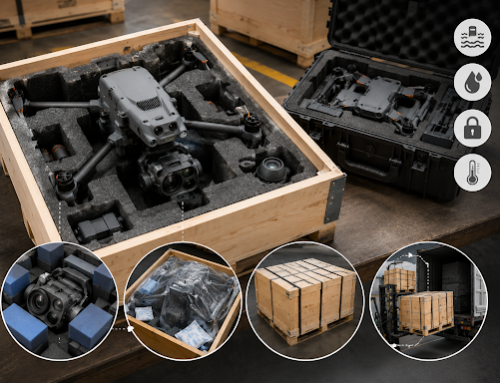
Data center hardware isn’t uniform. A server chassis, a UPS unit, and a cooling module all have different weight distributions, fragile points, and handling requirements. Ask if your partner does actual packaging design testing around your specific equipment, or if you’re getting a catalog item that’s “close enough.” Custom engineering upfront is almost always cheaper than a damaged shipment later.
4. Can they build to the load, not just to the crate?
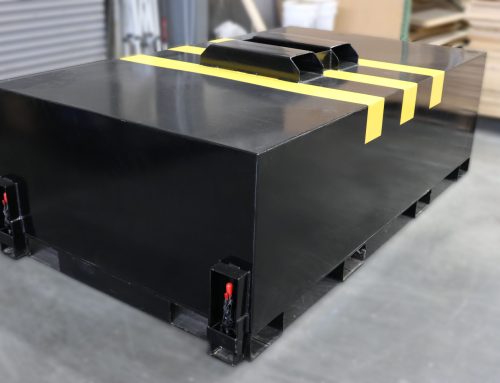
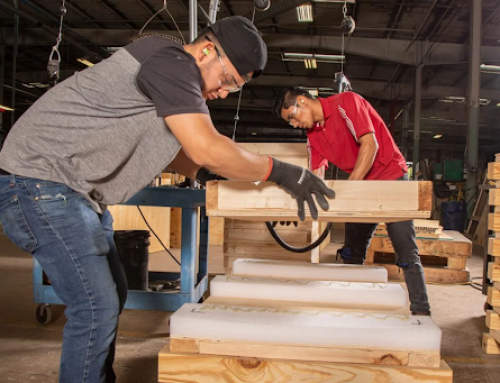
Beyond the outer packaging, ask what your partner can offer in terms of custom pallets and crates and skid and pallet builds designed around your equipment’s actual footprint and center of gravity, not a generic pallet size that leaves your hardware shifting in transit.
5. Is this a one-time crate, or a full packaging program?
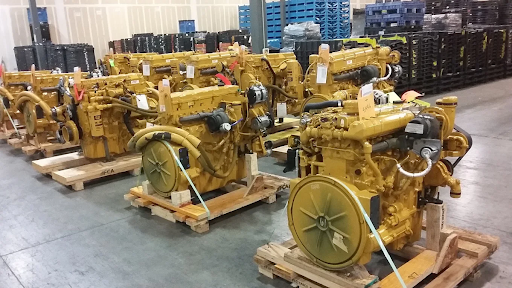
A single shipment might only need a box. A data center rollout dozens or hundreds of units across multiple sites needs a partner who can deliver consistent crate and pack solutions at scale, on schedule, site after site. Ask how they handle repeat orders, lead times, and quality consistency across a multi-site rollout, not just a single order.
6. What happens when something doesn’t fit the standard process?
Data center hardware changes fast – new server generations, new cooling architectures, new form factors. Ask your packaging partner how they handle a piece of equipment they haven’t packaged before. The right answer involves engineering and testing, not guesswork.
The Real Cost of Getting This Wrong
Damaged data center equipment rarely just costs the price of the unit. It costs the replacement lead time, the delayed go-live date, and the credibility of everyone involved in the build. Packaging is a small percentage of a project’s total cost and one of the few parts of it that can derail the whole schedule if it fails.
Where FCA Fits In
FCA works with equipment manufacturers shipping into data center builds across the country, combining engineering, in-house testing, and manufacturing under one roof. If you’re evaluating a packaging partner for your next rollout, our team can walk through your equipment, your shipping lanes, and where a custom-engineered approach would reduce your risk.
FAQs
1. Why is custom packaging important for data center equipment?
Custom packaging is designed around the size, weight, and fragility of each piece of equipment. It minimizes movement during transit, reduces damage, and helps ensure equipment arrives installation-ready.
2. What types of packaging tests should a packaging partner perform?
A reliable packaging partner should conduct drop testing, vibration testing, compression testing, shock testing, and environmental testing to validate packaging performance before shipment.
3. How do custom pallets and crates improve shipping safety?
Custom pallets and crates are engineered to match your equipment’s footprint and center of gravity, reducing shifting, improving stability, and protecting valuable hardware during transportation.
4. Can packaging be designed for different shipping methods?
Yes. Engineered packaging can be customized for truck, rail, ocean freight, and air shipments by simulating real transportation conditions and selecting appropriate protective materials.
5. What should manufacturers look for in a packaging partner?
Look for a partner that provides in-house engineering, packaging testing, custom crate manufacturing, scalable production, and experience handling sensitive industrial equipment.