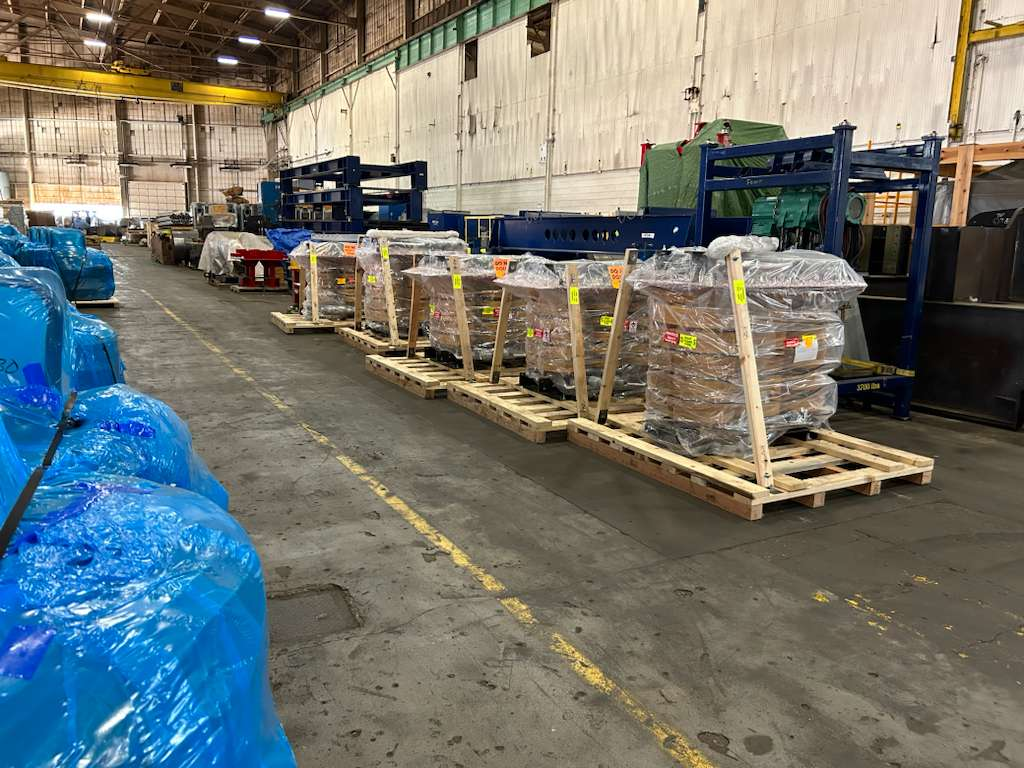
Robotics & Automation Packaging Solutions2026-09-03T04:10:44+00:00

Robotics Packaging That Protects Precision, Not Just Product

A robotic arm doesn’t fail the way most industrial products fail. It fails quietly. A servo motor takes a shock load in transit that never shows up as a dent or a crack, but three weeks later the arm is out of tolerance on the shop floor and nobody can explain why. A vision system arrives looking perfectly intact, and the first calibration run comes back with numbers that don’t match the pre-ship report. Standard packaging wasn’t built with any of that in mind.

Generic wooden boxes are Design around one variable

keeping a box from breaking open. Robotics and automation equipment introduce a longer list of failure points that a standard box was never designed to address:

Calibration loss

From repeated micro-shocks during handling and transit

Servo motor and gearbox damage

From axial or radial shock loads

Sensor and encoder damage

From vibration harmonics that build up over long-haul freight

Cable and connector stress

From movement inside an underbraced enclosure

Moisture and corrosion exposure

On control cabinets and exposed tooling

Shipping impacts

At dock transfers, forklift handling, and ocean or air freight legs

Shipping robotic arms, cobots, AGVs, AMRs, or complete automation cells? Talk to us before your next shipment leaves the dock –  we’ll walk through what your equipment needs before we ever cut a piece of wood. 

Custom Packaging Built Around Every Robotics System

No two pieces of robotics equipment load the same way, and packaging that treats them all alike is where problems start. We build Design solutions around the equipment type, not a one-size template.

  • Robotic Arms  Multi-axis arms carry their weight unevenly and often have a high center of gravity when created upright. We build boxes around the arm’s actual mass distribution, with internal blocking that locks the joints in a stable, low-stress position for transit rather than the position they’d naturally rest in on a plant floor.

  • Cobots  Collaborative robots are frequently smaller and lighter, which makes people assume they need less packaging. In practice, lighter equipment transmits shock and vibration more directly to internal components. Cobots need die-cut foam cradles sized to the exact unit, inside a box rated for the freight method.

  • AGVs and AMRs  Automated guided vehicles and autonomous mobile robots bring batteries, drive motors, and navigation sensors into the equation. We build packaging solutions with battery handling in mind, secure wheel or caster restraint so the unit can’t shift or roll internally, and moisture control for units shipping through humid regions or by ocean freight.

  • Machine Vision Systems  Cameras, lenses, and lighting arrays are dimensionally precise and often the most vibration-sensitive component in an automation cell. These get individually cushioned mounts inside a rigid outer structure, isolating them from the shock loads the rest of the box is absorbing.

  • End-of-Arm Tooling (EOAT)  Grippers, welding heads, and custom tooling are usually small enough to get treated as an afterthought and packed loose inside a larger box. That’s a mistake. EOAT gets its own blocked and braced compartment or a dedicated foam-lined case so it can’t shift and contact anything else in transit.

  • Automation Cells  Full cells – arm, tooling, conveyors, guarding, and controls shipped together – need a packaging plan built around sequencing. We design a packaging that accounts for how the cell will be unpacked and installed on the receiving end, not just how it survives the truck.

Robotic Arm & Automation Packaging

Robotic arms present a specific packaging problem: high value concentrated in a small footprint, an uneven weight distribution, and internal components – servos, encoders, harmonic drives – that are far more sensitive to shock than the external housing suggests. We Design solutions around the arm itself, starting with how it will be positioned, blocked, and braced internally, then building the outer box structure to match the shipping method, whether that’s LTL freight, flatbed, ocean container, or air cargo.

Here’s how that Design approach compares to a standard solution pulled off a shelf:

Feature Standard Crating FCA Design Packaging
Design basis Generic box sized to outer dimensions Built around equipment weight, center of gravity, and fragility
Internal support Loose padding or none Custom blocking, bracing, and foam cradles matched to the unit
Shock protection Minimal to none Design cushioning calculated for expected G-forces
Vibration control Not addressed Dampening materials selected for the shipping mode
Moisture protection Rarely included Vapor barriers and desiccant where equipment requires it
Lifting points Standard box corners Positioned around actual load balance points
Documentation None Packaging specs and handling instructions provided
Reusability Single use Designed for multiple trips where applicable

The difference shows up on the receiving end. A generic solution might get the arm there in one piece. Design packaging is built to protect the calibration.

Vibration-Sensitive Component Protection

Robotics equipment doesn’t need to be dropped to be damaged. Sustained low-level vibration over a long freight route can be just as damaging as a single hard impact, and it’s a much harder problem to catch during a visual inspection. 

Shock loads Discrete moments – a hard brake, a dock plate transition, a forklift setting a box down too fast – addressed through Design cushioning that absorbs and dissipates energy.
Transport vibration Continuous and cumulative, working loose fasteners and slowly walking components out of alignment over a multi-day haul.
Calibration drift The downstream result of shock and vibration on precision-mounted components, sometimes requiring an on-site technician to correct.
Sensor movement Encoders, proximity sensors, and cameras can shift relative to their mount even when the outer housing shows no damage.
Cable protection Loose cabling that isn’t secured can chafe, pinch, or disconnect during transit.
Electronics protection Static-sensitive boards and drive electronics need physical isolation and, in humid lanes, moisture control.

We address all of this through Design foam matched to component sensitivity, internal blocking and bracing that locks equipment in place, and cushioning calculated to the equipment’s actual shock profile rather than a generic packaging chart.
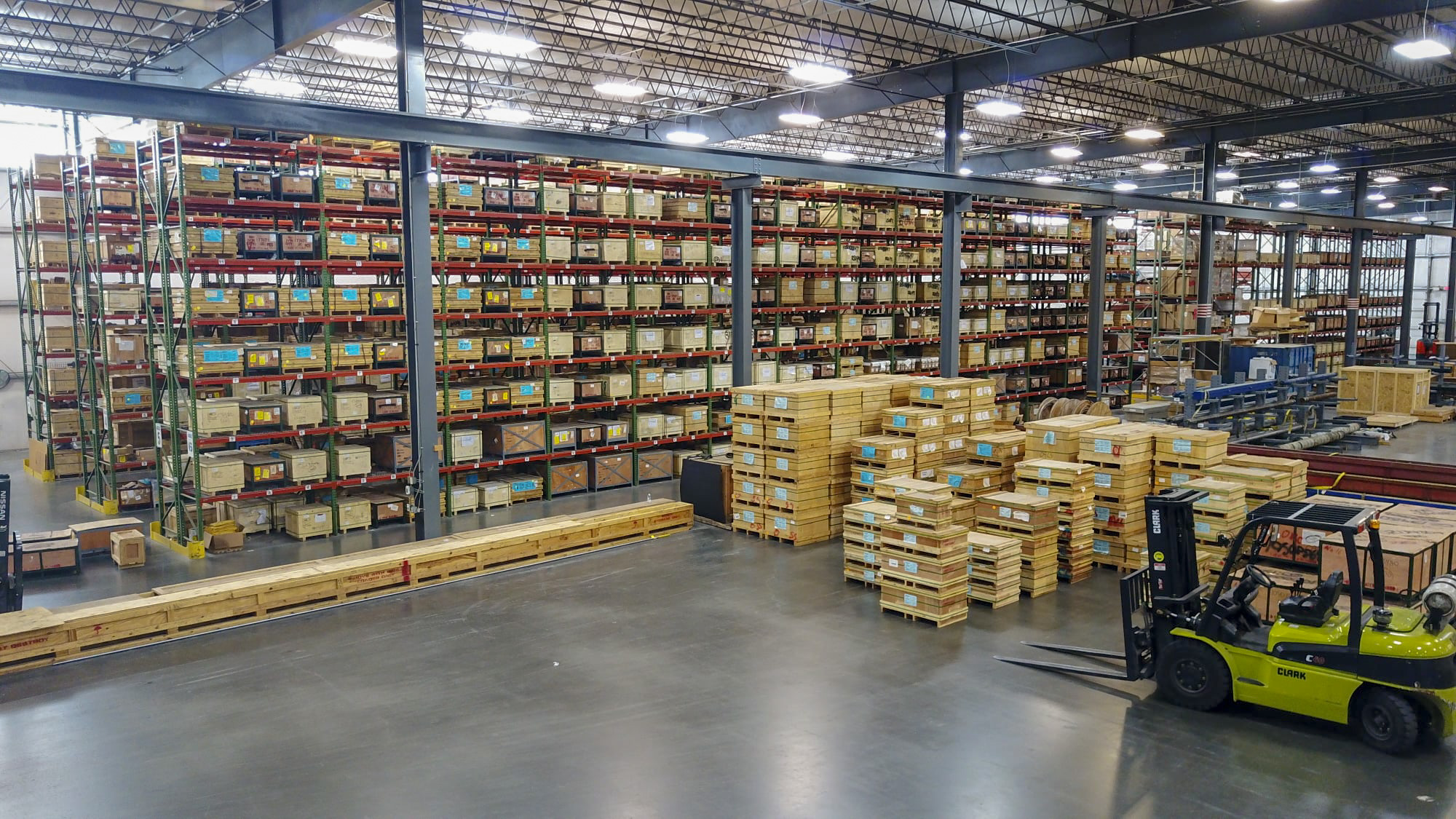
Industrial Packaging

International Shipping for Robotics OEMs 

  • ISPM-15 compliance — Non-negotiable for any wood packaging crossing an international border. Every wood box we build for export is produced to ISPM-15 standard from the start.

  • Ocean freight — Exposes equipment to the longest transit times and highest humidity exposure. The design of a solution should account for extended vibration exposure and include moisture control as standard practice.

  • Air freight — Trades transit time for tighter size and weight constraints. We Design packaging solutions to hit weight targets without cutting corners on internal protection.

  • Export packaging — Designed for customs inspection access – boxes that can be opened, inspected, and resealed without compromising internal protection.

  • Moisture protection — Vapor barrier bags, desiccant, and humidity indicators protect electronics from condensation during climate and temperature swings.

  • Corrosion protection — Protects exposed metal components and fasteners sitting in a humid ocean container for weeks.

  • Reusable export boxes — Worth considering for OEMs shipping the same configuration repeatedly, cutting per shipment cost while maintaining protection.

Protecting OEM Equipment During Shipping

For robotics OEMs, an Design packaging design is the best option for success. When equipment arrives damaged – or arrives intact but fails calibration or performance checks during commissioning – the OEM is usually the one absorbing the cost.

Design packaging is the best option to protect against all five, and it’s also proof an OEM can point to if a damage claim ever needs to go to a carrier when the packaging has been tested to industry standards.
  • Warranty claims filed for damage that technically occurred in transit but gets attributed to the equipment itself

  • Installation delays when equipment fails commissioning checks

  • Hidden damage that doesn’t surface until the equipment is under load

  • Customer dissatisfaction that has nothing to do with the equipment’s design

  • Costly repairs that could have been a fraction of the cost of proper packaging

Industries We Support

Robotics and automation equipment moves across more sectors than most people expect, and each one brings its own packaging constraints:

  • Data Center

    Server racks, power systems, cooling equipment, and network infrastructure protected for secure transport and deployment.

  • Robotics & Automation

    Robotic arms, AGVs, AMRs, automation cells, and precision equipment packaged to prevent shock, vibration, and calibration drift.

  • Semiconductor 

    Ultra-precision manufacturing and handling equipment requiring maximum protection against vibration, contamination, and impact.

  • Lithium Battery

    Design packaging for lithium batteries and energy storage systems with solutions designed for safe transport and regulatory compliance.

  • Medical Equipment 

    Diagnostic devices, laboratory instruments, and sensitive medical equipment protected with clean, precision-engineered packaging.

  • Drone & UAV 

    Commercial drones, UAVs, payloads, sensors, and ground support equipment secured for safe shipping and storage.

Our Design Process

Every robotics packaging project follows the same disciplined process, whether it’s a single arm shipping across the state or a full automation cell headed overseas.
  • Step 1 — Consultation We start with a conversation about the equipment, the destination, the shipping method, and any known risk points – prior damage history, tight calibration tolerances, or handling constraints on the receiving end.

  • Step 2 — Equipment Review Our team reviews equipment drawings, weight and dimension data, and fragility requirements to understand exactly what the packaging needs to protect against.

  • Step 3 — Packaging Design We design the boxes, cushioning, and internal bracing around the specific equipment, factoring in shipping mode, distance, and handling conditions along the route.

Why Manufacturers Choose FCA Packaging

  • Design -first approach – packaging is designed around the equipment, not fit to a standard box size

  • Deep experience protecting high-value, precision-sensitive equipment across multiple industries
  • ISPM-15 compliant export boxes built to standard on every international order

  • In-house packaging testing to validate protection before equipment ever ships

  • Reusable and returnable packaging programs for recurring shipments

  • Documentation and handling guidance that supports OEM warranty positions

  • Domestic and international shipping expertise, from single boxes to multi-unit programs

  • A team that treats packaging as an Design discipline, not an afterthought

FAQs

Do you offer reusable boxes for robotics equipment?2026-08-21T12:35:24+00:00

Yes. We build reusable and returnable boxes that provide consistent protection while reducing long-term packaging costs for repeat shipments.

Can you package complete automation systems?2026-08-21T12:32:55+00:00

Yes. We package complete automation cells, including robotic arms, tooling, conveyors, control cabinets, and other integrated equipment for safe transport and installation.

How do you protect robots from shipping damage?2026-08-21T12:32:07+00:00

We use custom foam, internal bracing, and vibration-control materials to minimize shock, movement, and the risk of calibration loss during transit.

Is your export packaging ISPM-15 compliant?2026-08-21T12:31:26+00:00

Yes. Our wood packaging meets ISPM-15 requirements and is designed to support safe international shipping and customs compliance.

Can FCA package a robot we’ve never shipped before?2026-08-21T12:27:35+00:00

Yes. We design custom packaging based on your equipment’s size, weight, and protection requirements, with prototype testing available for new or complex systems.

What makes robotics packaging different from standard industrial packaging?2026-08-21T12:23:24+00:00

Robotics packaging is Design to protect sensitive components from shock, vibration, and movement, helping prevent damage and calibration issues during transit.

Go to Top