Drones are only as reliable as the batteries that power them and lithium batteries are, without question, the most sensitive component in the entire system. A drone airframe can absorb a surprising amount of rough handling. Its battery pack cannot. A single drop, a puncture from an unsecured pallet edge, or a few hours sitting in a hot trailer can be enough to turn a functional battery into a safety hazard.
For manufacturers, integrators, and fleet operators shipping or storing drones at scale, battery damage isn’t just a cost problem – it’s a liability problem. Understanding why lithium batteries fail in transit, and how proper industrial packaging solutions prevent it, is the difference between a routine shipment and a returned, unusable (or dangerous) unit.
Why Lithium Batteries Are So Vulnerable in Transit
Lithium-ion and lithium-polymer battery packs used in drones are energy-dense by design – that’s what gives drones their flight time. But that same energy density makes them intolerant of a few very specific stresses:
- Physical impact and crushing — even a minor deformation of the battery casing can damage internal cells and create a short.
- Vibration over long-haul transport — repetitive micro-shocks loosen connectors and stress cell structures in ways that aren’t visible on inspection.
- Temperature extremes — heat buildup in cargo holds or unclimatized warehouses accelerates degradation and, in worst cases, triggers thermal runaway.
- Static discharge and short-circuit risk — unprotected terminals can contact conductive packaging materials or other batteries during transit.
None of these risks are hypothetical. They’re the reason carriers, insurers, and regulators (IATA, DOT, UN 38.3) treat lithium battery shipments as a distinct hazard class and why “we’ve always packed it this way” is rarely good enough once a fleet scales past a handful of units.
What Damage Actually Costs You
A cracked battery casing rarely shows up as a clean, obvious failure. More often, it shows up as:
- A drone that fails pre-flight checks after “successful” delivery
- A warranty claim that can’t be traced back to a root cause
- A carrier refusing future hazmat shipments after an incident
- In the worst case, a thermal event in a warehouse or delivery vehicle
Each of those is expensive in a different way – replacement cost, downtime, insurance exposure, or reputational damage with the customer who received a damaged unit. The fix is almost always upstream: the packaging never accounted for the battery’s actual failure modes.
Building Packaging Around the Battery, Not the Box
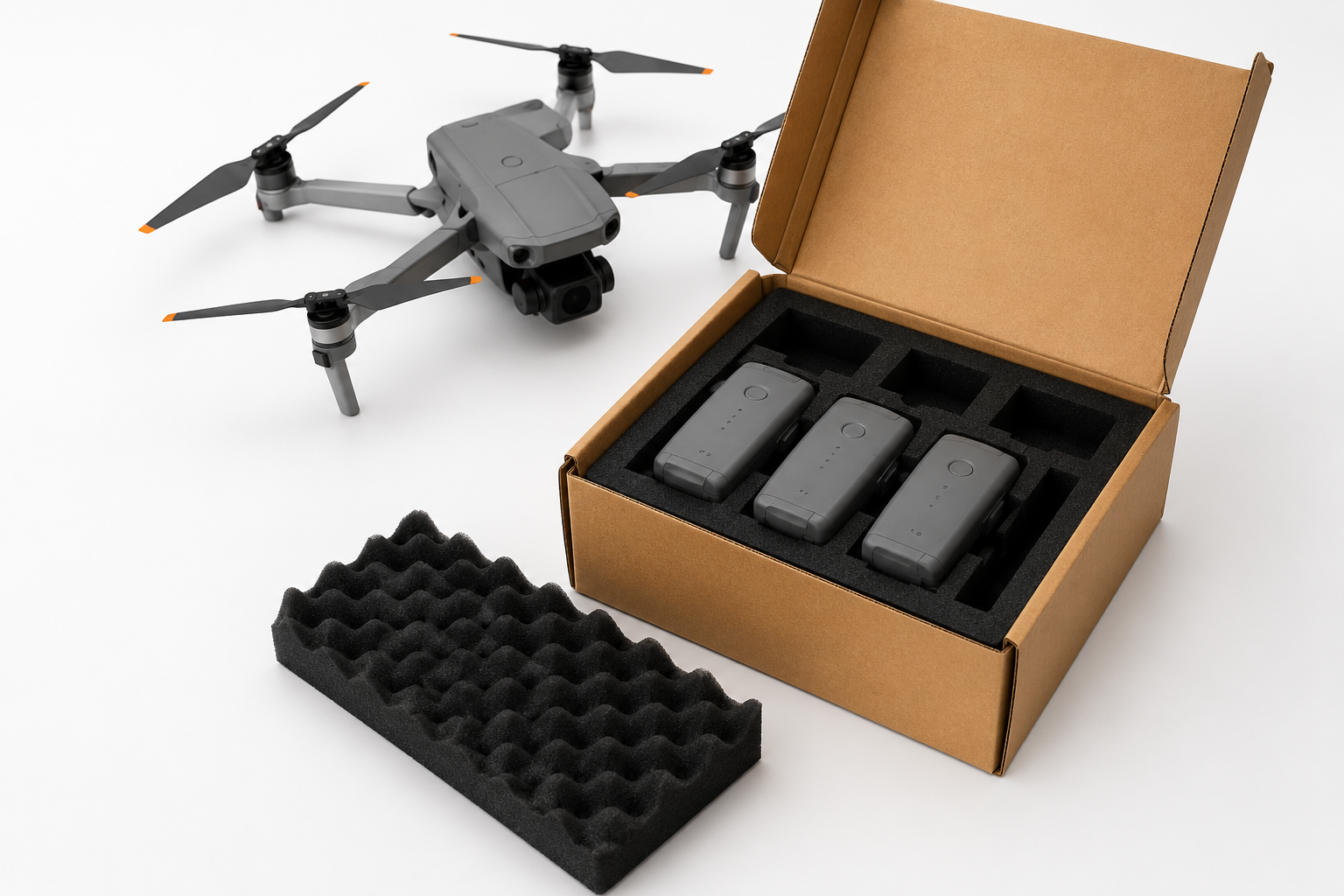
Off-the-shelf foam-in-a-box packaging is built around a generic idea of “fragile.” Lithium battery packaging needs to be built around the specific failure modes above which means it’s an engineering problem, not just a materials one.
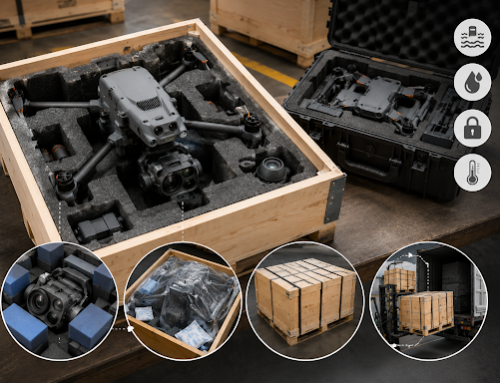
A properly engineered solution typically includes:
- Terminal isolation and short-circuit prevention – non-conductive dividers and terminal caps that stay in place through handling, not just at time of pack-out
- Impact-absorbing cushioning sized to the battery’s actual weight and center of gravity, not a generic foam insert
- Vibration dampening validated against real transportation profiles, not assumed from the material spec sheet
- Thermal buffering for shipments that will sit in trailers, tarmacs, or non-climate-controlled warehouses
- UN-rated outer packaging where the shipment volume or battery watt-hour rating requires it
This is exactly the kind of problem FCA’s design and engineering team is built to solve – running transportation tests for packaging and packaging performance testing in a dedicated lab environment before a design ever reaches production, rather than finding out something failed after a customer opens a damaged box. That includes drop testing, vibration simulation, and climate testing specifically calibrated to how a battery pack actually moves through a supply chain, not a one-size-fits-all standard.
Where Custom Packaging Makes the Difference
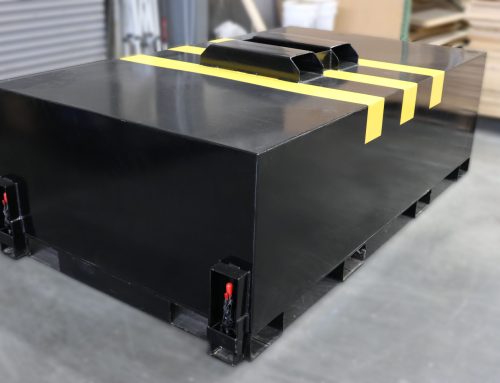
For drone manufacturers shipping mixed pallets – airframes, battery packs, controllers, and accessories all moving together – standard packaging almost never fits the actual risk profile of the load. This is where custom pallets and crates earn their cost back quickly: a crate engineered around your specific battery pack dimensions and weight distribution keeps cells isolated, cushioned, and secured for the full route, whether that’s a single ground shipment or a multi-leg international move.
For operators who need batteries staged, stored, or moved between facilities on a recurring basis, a skid and pallet system designed for repeat handling also reduces the cumulative wear that comes from re-packing loose units into generic containers every cycle.
A Practical Checklist Before Your Next Shipment
Before your next drone battery shipment leaves the dock, it’s worth confirming:
- Are battery terminals physically isolated from each other and from conductive surfaces?
- Has the cushioning been sized and tested for this specific battery’s weight and shape – not just “similar enough”?
- Does the packaging account for the actual transit environment (ground vs. air, climate-controlled vs. not)?
- Is the outer packaging rated correctly for the battery’s watt-hour classification?
- Has this configuration actually been tested – dropped, vibrated, and temperature-cycled or only assumed to work?
If the honest answer to any of these is “not sure,” that’s usually the sign it’s time to move from generic packaging to an engineered crate and pack solution built around the battery itself.
The Bottom Line
Lithium batteries don’t fail in transit because shippers are careless – they fail because generic packaging wasn’t designed around the way batteries actually get damaged. As drone fleets scale from a handful of units to hundreds, the cost of an unengineered pack-out scales right along with it.
FCA works with drone manufacturers and operators to design, test, and validate industrial packaging solutions specific to lithium battery risk – from single-unit protective cases to full pallet-level solutions for fleet shipments. If your current packaging hasn’t been stress-tested against real transportation conditions, our team can help you find out before your next shipment does.
FAQs
1. Why are lithium batteries vulnerable during drone shipping?
Lithium batteries can be damaged by impacts, vibration, temperature changes, and short circuits during transit. Proper packaging helps reduce these risks and improves shipping safety.
2. What packaging protects drone lithium batteries?
Engineered packaging with cushioning, terminal protection, vibration control, and thermal buffering helps protect lithium batteries during storage and transportation.
3. Why is packaging testing important?
Packaging testing verifies that a package can withstand drops, vibration, compression, and environmental conditions before shipment, helping reduce damage and returns.
4. Do drone lithium batteries require special packaging?
Yes. Many lithium battery shipments must comply with regulations such as UN 38.3, DOT, and IATA, which may require UN-rated packaging and proper labeling.
5. How do custom pallets and crates help?
Custom pallets and crates secure batteries based on their size and weight, reducing movement, impact, and damage throughout the shipping process.
6. What should I check before shipping drone batteries?
Ensure battery terminals are protected, cushioning is properly designed, the packaging matches the shipping method, and the package has been tested for transit conditions.