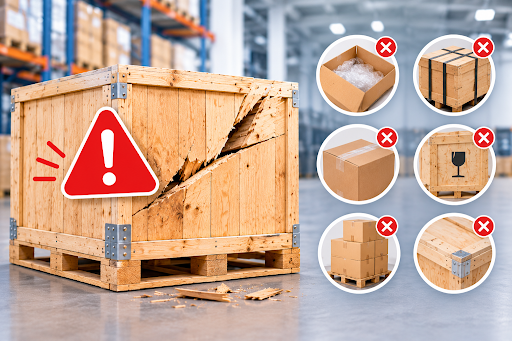
Shipping damage can be expensive for manufacturers. A damaged product may result in repair costs, replacement expenses, production delays, customer complaints, and additional freight charges. For heavy, fragile, oversized, or high-value products, the packaging itself plays an important role in preventing these problems.
Many shipping failures are not caused by transportation alone. They can begin with packaging that does not properly account for the product, handling process, or transportation environment.
Here are some common industrial packaging mistakes manufacturers should avoid.
1. Using Standard Packaging for Specialized Products
One of the most common mistakes is assuming that a standard pallet, crate, or box will provide adequate protection for every product.
Industrial equipment varies significantly in size, weight, shape, center of gravity, and fragility. A standard package may leave too much empty space, provide insufficient structural support, or make the product difficult to handle.
Custom industrial packaging solutions are designed around the actual product and its transportation requirements. This can include custom boxes, pallets, skids, cushioning, blocking, and bracing.
2. Choosing the Wrong Packaging Skid
A packaging skid is more than a platform for placing equipment. It needs to support the load while allowing safe lifting, handling, and transportation.
Using a skid that is too small, weak, or poorly configured can create uneven load distribution and increase the risk of movement or structural failure.
Custom skids can be designed around the product’s dimensions, weight, lifting points, and forklift requirements.
3. Failing to Control Product Movement
Even when the outer crate remains intact, equipment can be damaged if it moves inside the package.
Heavy products can shift because of acceleration, braking, vibration, impacts, or rough handling. Proper blocking and bracing helps hold the product securely in position.
For sensitive equipment, cushioning and product-specific restraints can further reduce movement and impact forces during transportation.
4. Ignoring Vibration and Shock
Transportation exposes products to more than occasional drops. Truck, rail, air, and ocean freight can subject equipment to continuous vibration, impacts, and changes in loading conditions.
This is particularly important for precision equipment, electronics, robotics, and automation systems. For example, Industrial Drone Transport Packaging may need to protect sensors, payloads, motors, and other sensitive components from movement and vibration.
Packaging should therefore be designed around the expected transportation environment rather than simply adding more material.
5. Treating Specialized Products Like Ordinary Freight
Certain products require additional packaging considerations.
For example, packaging lithium batteries for shipment may involve specific safety and regulatory requirements depending on the battery and transportation method. Similarly, robotics, aerospace components, medical equipment, and electronics may require specialized cushioning, moisture protection, or structural support.
FCA Packaging provides packaging solutions for lithium batteries, UAVs, robotics, electronics, dangerous goods, and other high-value industrial products.
6. Overlooking Moisture and Environmental Exposure
Moisture can create serious problems for metal components, electronics, machinery, and other industrial products – especially during long-distance or ocean transportation.
Depending on the application, packaging may require vapor barriers, corrosion protection, moisture-control measures, or other environmental protection.
The packaging design should consider where the product is going and the conditions it may experience along the way.
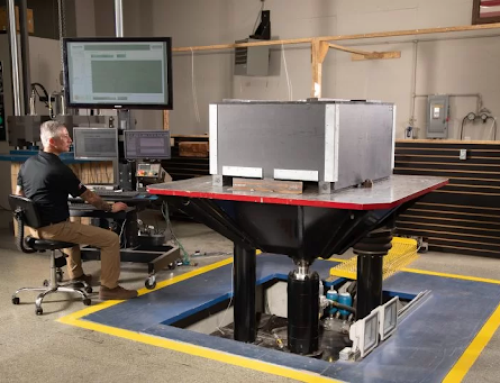
7. Skipping Packaging Testing
A package may look strong without actually performing well during transportation.
Testing can help identify weaknesses before products enter the supply chain. Depending on the application, manufacturers may evaluate packaging for vibration, compression, incline, shock, or other transportation conditions.
FCA Packaging combines packaging engineering with testing and manufacturing to help validate packaging performance before shipment.
How to Prevent Costly Packaging Failures
The best way to reduce shipping damage is to design packaging around the product, handling process, and transportation environment from the beginning.
Before selecting a box, crate, pallet, or skid, consider:
- Product dimensions and weight
- Center of gravity and load distribution
- Forklift and lifting requirements
- Shock and vibration exposure
- Moisture and environmental conditions
- Domestic or international shipping
- Special regulatory requirements
- Unloading and installation procedures
- Testing and validation requirements
- Regulatory requirements
Custom industrial packaging can bring these factors together into one coordinated solution rather than relying on a standard package.
Choose Industrial Packaging Designed for the Journey
The right packaging should protect a product from the moment it is packed until it reaches its final destination. FCA Packaging designs and manufactures custom boxes, pallets, skids, protective interiors, and engineered packaging solutions for demanding industrial applications.
If your products are experiencing shipping damage or you want to prevent it before it happens contact FCA Packaging to discuss a custom industrial packaging solution built around your product and supply chain.
FAQs
1. What are the most common industrial packaging mistakes?
Common mistakes include using standard packaging for specialized equipment, selecting an inadequate skid, failing to control product movement, overlooking vibration and moisture, and skipping packaging testing.
2. When should I use a custom packaging skid?
A custom packaging skid is beneficial when equipment is heavy, oversized, unusually shaped, fragile, or requires specific forklift, lifting, or load-distribution requirements.
3. How can industrial packaging reduce shipping damage?
Properly engineered packaging can control product movement and provide structural support, cushioning, blocking, bracing, and environmental protection based on the expected transportation conditions.
4. Does lithium battery packaging require special consideration?
Yes. Packaging lithium batteries for shipment may involve specific safety and regulatory requirements based on the battery type and transportation method. Packaging should be developed for the applicable shipping requirements.
5. Can packaging be tested before shipping?
Yes. Packaging can be evaluated through transportation-related testing such as vibration, compression, incline, and other applicable tests to identify potential weaknesses before shipment.